
Written by Ray Ott, Updated by Tisha Solopa and Yoana Zamora Miranda, SEO optimized by Rostane Gribi
—
In this post-pandemic age, much of the international development community has switched to digital formats for the dissemination of information. Meeting methodologies, like Zoom and Microsoft Teams, were quickly established and expanded alongside the use of digital apps for cell phones. These communication tools have improved engagement with many people, particularly women and smallholder farmers, who benefit from much-needed information related to health, nutrition, disease, climate change, gender based violence, and a vast array of other topics. Although digital formats spread awareness campaigns on these issues, they still leave many parts of the developing world behind, especially illiterate women in Africa and South Asia. For this reason, radio should not be abandoned as a communication for development, also known as C4D.
Radio Communication for Development in Africa and South Asia
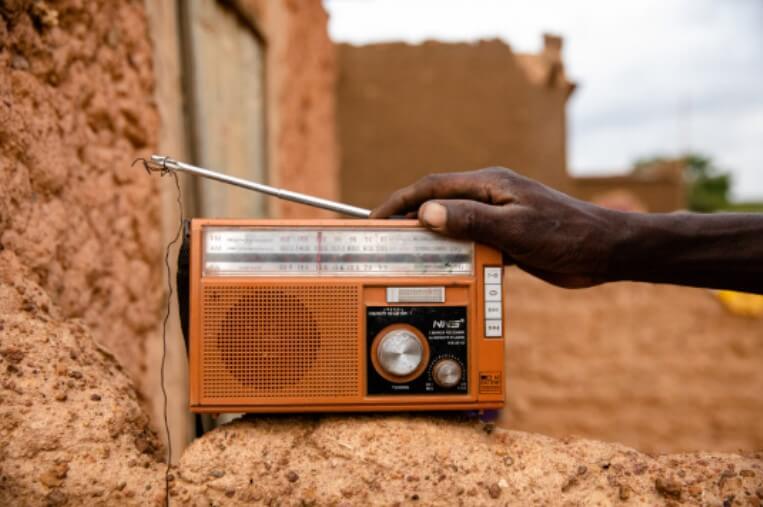
In the regions of Africa and South Asia, radio communication reigns as the supreme form of media. This medium of C4D has shaped both society’s experience of inclusion. Individuals are open to speaking up, being represented, and being heard. Over the years, community-centered radios have provided vital information on emergencies and crises. It proved to be effective in delivering early warnings in times of disaster, giving adequate time for evacuation. In the decade of the 1960s, the number of radios increased at astounding rates. The number of radios used for C4D in South Asia increased by 380% and in Africa by 271%. According to Statista, 766.4 million people in Asia are radio listeners as of 2025, highlighting the ongoing relevance of radio since its early development in the 1900s. The report “100 Years of Radio in Africa” estimates that 60-80% of the 1.4 billion population of Africa regularly listens to the radio, showing its widespread use and accessibility.
The Effectiveness of Radio Programme for C4D
Radio continues to be a popular and inexpensive method of communication for development across diverse regions. The publication “Our Conversation” notes that there are over 44,000 radio stations in the world, showing the media’s presence and influence. In Africa, radio outnumbered both newspapers and TV stations. Traditional radio remains one of the most accessible and cost-effective forms of C4D, especially in regions with limited internet connectivity.
Modern radio sets equipped with solar panels have further expanded access, allowing communities without electricity to stay informed and engaged. Unlike many digital platforms, radio broadcasts often cater to C4D through diverse linguistic audiences by delivering content in local languages and dialects. This inclusivity makes radio particularly effective for reaching illiterate populations and the elderly, stimulating broader awareness and participatory processes across all segments of society. This communication tool provides access to educational and agricultural production programs.
Despite the positive impacts of radio communication, it possesses many shortcomings as a C4D. Its limitations become evident during emergencies, as the infrastructure is sensitive to climate disasters, leaving people without information when they are the most vulnerable. The international development community is redirecting funding from radio communication to initiatives that advance quick transmissions through digital communication.
However, this approach neglects over half of Africa’s population that do not have internet and who will not receive any communication. Illiterate women are amongst the most at risk without audible news on safety procedures, especially regarding ongoing comdev efforts combating gender based violence. Unfortunately, many radio transmissions that further this positive social change are unreliable because they are subject to foreign policy that disrupts their services. Addressing these shortcomings requires sustainable solutions rooted in accessibility, empowerment, and a grassroots network.
Methodologies to Promote Radio to Audiences
A shift toward locally sustained broadcasting hubs offers a practical solution, based on sustainability, to reducing the dependency on foreign organizations and expanding access to information to all people. To increase the capacity of radio communication, stakeholders should diversify the sources of funding and consultation.
The strategy could include partnering with local investors, streamlining the connection between urban-rural radio modules, and boosting the size of the audience through traditional public campaigns, using word of mouth and flyers. Women should guide these leadership, campaign, and outreach efforts because they have the perspective necessary to engage with the women who will benefit from these development initiatives the most. By appealing to domestic interests, the promotion and growth of local radio broadcasting under the leadership of women will increase the effectiveness of advancing behavioral social change.
It is also important to note that a local system is preferable to foreign media because it is receptive to specific nuances of a region. It can provide knowledge management programmes that are in a variety of languages, relevant to the region, and fast to reach people. This system is especially crucial for practitioners, like smallholder farmers working in agriculture around rural areas, who could reduce the impact of climate disasters on crop production with timely information.
Additionally, this communication plays an important and ethical role in increasing general public health because people can receive news on best practices, such as vaccinations for animals that could carry deadly zoonotic diseases like rabies. By investing in local radio transmissions, a sustainable diffusion of critical information will be ensured, which will be accessible to even the most vulnerable populations.
It is important to consider Barrett’s HF radio equipment, as a valuable communication for development tool offering reliable communication in remote areas effectively without extensive ground infrastructure. The HF radio is ideal for remote environments and is flexible enough to merge into existing infrastructure to empower participatory communication through dialogue.
The HF radio is designed to be user-friendly, looks and operates like a mobile device, fostering accessibility to end users. HF radio supports long-distance communication without the need for a cellular network, making it invaluable in areas with limited or no connectivity. Within rural settings, HF radio is a reliable source of strengthening security measures in rural settings whereby it supports effective patrol communication, be it safeguarding of livestock or crop produce. Adopting Barrett HF radios establishes a sustainable communication solution that not only enhances connectivity but also supports and strengthens the livelihood of individuals in remote areas.
Conclusion
Radio communication has been transformative in Africa and South Asia. It has aided C4D initiatives in these regions, making it more accessible. It delivers crucial information to promote public health strategies, warn farmers about climate shocks, empower women against gender based violence, and so much more. However, radio communication falls short on funding that is now directed towards digital communication, leaving vulnerable communities with less or no communication. In rural or remote areas, poorly built infrastructures are sensitive to climate disasters and, in times of emergencies, limit news access.
Despite the emergence of digital communication, radio communication is the most sustainable way to engage with communities because its low cost and dependability make it accessible. This is evident through the promise that Barrett’s HF radio equipment holds in operating without complicated systems. By investing in local radio led by women, radio communication infrastructure can be expanded, bringing about social change.
We-Empower Inc. uses the latest technologies to strengthen the capacity in C4D of all stakeholders. We apply our expertise in digital strategies, programme evaluation, and enterprise development to evolve communication infrastructure around the world through innovative media and website design.
Acknowledgments
This article was developed under the mentorship of Noubia Gribi-Hussain, whose expertise in designing and managing international development assistance initiatives contributed to the understanding of gender mainstreaming and urban-rural dynamics. Rostane Gribi provided significant guidance on SEO through expertise in website development, digital marketing, and technical enhancement.
FAQ
What is the meaning of communication for development?
Communication for development is a framework built to transmit information between people that facilitates the improvement of communities economically, socially, and politically. To join this work, consider taking a C4D course developed by the FAO ComDev team under the Food and Agriculture Organization.
Why is communication important for development?
It interconnects individuals sharing knowledge to inspire cooperation in the monitoring and evaluation of sustainable development across local, national, and global spaces.
What is communication for development activities?
C4D activities are the processes through which strategic communication creates social change. This includes the participation and engagement of communities and organisations like NGOs in decision-making, constant deliberation between groups to evaluate progress, and the implementation and monitoring of development programs.
What are the types of developmental communication?
Developmental communication has various approaches on using communication to enhance social progress. The communication types include mass media communication, educational communication, community communication, advocacy and awareness campaigns, social marketing and health communication.
What are the 5 areas of development communication?
Aspects of development through communication involve: development journalism, educational communication, science communication and development broadcasting.
What are the 4 main types of communication?
Types of communication include verbal, non-verbal, written and visual communication.
What is an example of communication development?
An example is building local radio broadcasting to be inclusive of rural areas. A United Nations development programme had UNICEF form partnerships with local organisations in Guinea to build 10 new rural broadcasting stations and renovate 16 more through strategic methods that combat illiteracy, language barriers, and funding shortages.
What are the 4 basic styles of communication?
Styles of basic communication consist of passive communication, aggressive communication, passive-aggressive communication, and assertive communication.
References
- Statista Market Insights, 2024, www.statista.com/outlook/amo/media/music-radio-podcasts/traditional-radio/southern-asia.
- Sisanda Nkoala et al. “100 Years of Radio in Africa: From Propaganda to People’s Power.” The Conversation, 13 Feb. 2024, theconversation.com/100‑years‑of‑radio‑in‑africa‑from‑propaganda‑to‑peoples‑power‑222798.
- Kindzeka, Moki Edwin. “African Broadcasters: Radio Still Reigns Supreme Across Continent.” Voice of America, 9 Aug. 2023, www.voanews.com/a/african-broadcasters-radio-still-reigns-supreme-across-continent-/7218451.html.
- Wadhwa, Divyanshi. “More Men Than Women Are Literate.” World Bank Blogs – Open Data, 5 Sept. 2019, blogs.worldbank.org/en/opendata/more-men-women-are-literate.
- Reporters Without Borders. “Radio Free Asia Taken Off Air: Millions of People Deprived Access to Reliable Information.” RSF, 10 Apr. 2025, rsf.org/en/radio-free-asia-taken-air-millions-people-deprived-access-reliable-information.
- “Overcoming Radio Communications Challenges in Africa.” Airport Technology, sponsored by Barrett Communications, 2025, www.airport-technology.com/sponsored/overcoming-radio-communications-challenges-in-africa/
- Food and Agriculture Organization of the United Nations. (n.d.). Learning | Communication for Development. Retrieved July 23, 2025, from https://www.fao.org/communication-for-development/resources/learning/en
- La Rose, T. (2016, September 14). With 10 new stations, radio reach expands in rural Guinea. UNICEF. https://www.unicef.org/stories/10-new-stations-radio-reach-expands-rural-guinea